





Last updated: February 23, 2026
Table of Contents
How to Choose a Tax Preparation Service: 7 Key Questions. Choosing the wrong tax preparer can cost your small business thousands of dollars in missed deductions, compliance penalties, or even IRS audit headaches. The right tax preparation service becomes a strategic partner who understands your business structure, identifies every legitimate deduction, and keeps you compliant year-round. For small business owners in Cheyenne, finding a qualified tax professional means asking the right questions before you hand over your financial documents.
The stakes are high. You remain legally responsible for every number on your tax return, regardless of who prepares it. Courts and the IRS won’t accept “my tax preparer made a mistake” as a valid defense. This makes selecting a competent, trustworthy tax preparation service one of the most important business decisions you’ll make each year.
Key Takeaways
- You remain legally responsible for your tax return’s accuracy, even when using a professional tax preparation service
- Verify credentials first: Look for CPAs or enrolled agents registered with the IRS and state boards
- Fee structures matter: Reputable tax preparers charge based on complexity and time, never as a percentage of your refund
- Ask about representation rights: Only CPAs, enrolled agents, and tax attorneys can represent you before the IRS
- Check year-round availability: Tax planning happens throughout the year, not just during filing season
- Confirm technology and security: Your tax preparer should use encrypted systems and IRS-certified software
- Request references: Established tax professionals should provide references from similar small businesses in Cheyenne
Quick Answer

Choosing a tax preparation service requires verifying professional credentials (CPA or enrolled agent status), understanding their fee structure (hourly or flat-rate, never refund-based), confirming IRS representation rights, and ensuring year-round availability for tax planning. The best tax preparers for small businesses combine technical expertise with industry-specific knowledge, use secure technology platforms, and maintain transparent communication about your tax situation and potential audit risks.
Why Credentials Matter When Selecting a Tax Preparation Service
Professional credentials determine whether your tax preparer has the training, legal authority, and ethical obligations to handle your small business taxes properly.
Chartered Professional Accountants (CPAs) hold the highest credential in the accounting field. CPAs complete rigorous education requirements, pass comprehensive examinations, and maintain ongoing professional development. They’re licensed by state boards and subject to strict ethical standards[1]. When you work with a certified public accountant in Cheyenne Wyoming, you gain access to someone who can handle complex tax situations, provide strategic tax planning advice, and represent you before the IRS.
Enrolled Agents (EAs) specialize exclusively in taxation. They’re federally licensed by the IRS and have unlimited practice rights, meaning they can represent taxpayers in all 50 states. EAs must pass a three-part comprehensive exam covering individual and business tax returns or have five years of experience working at the IRS[7].
Tax attorneys bring legal expertise to complex tax matters, particularly useful for business restructuring, estate planning, or tax court proceedings. They offer attorney-client privilege protection that other tax professionals cannot provide.
Independent tax consultants may prepare returns but cannot represent you before the IRS. While some are knowledgeable, they lack the credentials and representation rights of CPAs or enrolled agents.
What to verify before hiring
- Current license status with state boards or IRS
- PTIN (Preparer Tax Identification Number) registration
- Professional liability insurance coverage
- Clean disciplinary record with licensing bodies
- Membership in professional organizations (AICPA, NATP, NSA)
Common mistake: Assuming all tax preparers have equal qualifications. The title “tax professional” doesn’t guarantee credentials. Always verify specific designations and licenses before sharing financial information.
Question 1: What Are Your Professional Credentials and Registration Status?
Start every tax preparer interview by asking directly about credentials, licenses, and registration numbers. A qualified professional will answer immediately and provide verification without hesitation.
Ask specifically: “Are you a CPA, enrolled agent, or tax attorney? What’s your PTIN number?” Every paid tax preparer must have a valid Preparer Tax Identification Number from the IRS. CPAs should provide their state license number, which you can verify through your state’s Board of Accountancy website[1].
For electronic filing, confirm they hold an EFILER number registered with the IRS. This registration ensures they use IRS-certified software, which dramatically improves accuracy and allows electronic submission[1]. Electronic filing typically processes refunds within 8-21 days compared to 6-8 weeks for paper returns.
Verification checklist
When interviewing tax preparation services, document these details:
- Full legal name of the preparer and firm
- PTIN number (searchable in IRS directory)
- State license number (for CPAs)
- EA enrollment number (for enrolled agents)
- Years in practice and continuing education hours
- Professional memberships and certifications
Choose a CPA if: Your business has complex deductions, multiple income streams, significant assets, or you need strategic tax planning beyond basic compliance. CPAs offer the broadest expertise and can grow with your business needs.
Choose an enrolled agent if: You need specialized tax expertise at potentially lower rates than CPAs, particularly for straightforward business returns or IRS representation for audits and collections.
Red flag: Any preparer who refuses to provide credentials, seems evasive about registration status, or cannot show proof of current licensing. Walk away immediately.
Question 2: How Do You Structure Your Fees for Tax Preparation Services?
Fee structure reveals a tax preparer’s professionalism and ethical standards. Reputable tax preparation services charge based on the complexity of your return and time required, not on the size of your refund.
Legitimate fee structures include:
- Hourly rates: Common for CPAs, typically ranging from $150-$400 per hour depending on expertise and location
- Flat fees: Set prices for specific return types (e.g., $500 for Schedule C sole proprietor, $1,200 for S-corporation)
- Tiered pricing: Different rates based on business complexity, number of schedules, and additional services
- Retainer arrangements: Monthly or annual fees for ongoing tax planning and preparation services
Unethical fee structures to avoid:
- Percentage of refund: If a preparer charges based on refund amount, they have financial incentive to inflate deductions or claim credits you don’t qualify for[1]
- Guaranteed refund promises: No professional can guarantee refund amounts without thoroughly reviewing your complete tax situation[1]
- Cash-only payments: Legitimate professionals accept checks and credit cards, providing clear paper trails
Getting fee transparency
Request a written fee agreement before engaging any tax preparation service. The agreement should specify:
- Base fee for return preparation
- Additional charges for schedules, forms, or complexity
- Fees for amendments, extensions, or correspondence
- Costs for audit support or IRS representation
- Payment terms and accepted methods
- Refund policy if applicable
For small business owners: Expect to pay more than individual returns. A basic Schedule C sole proprietorship typically costs $300-$800, while corporate returns (1120 or 1120-S) range from $800-$2,500 depending on complexity. These fees reflect the additional schedules, depreciation calculations, and compliance requirements for business returns.
Common mistake: Choosing the cheapest option without considering expertise level. A $200 return prepared by an unqualified preparer could miss $5,000 in legitimate deductions or create audit risks costing far more than the savings.
Understanding typical costs of using a tax preparation service helps you budget appropriately and recognize unrealistic pricing.
Question 3: What Experience Do You Have With My Type of Business?
Industry-specific knowledge makes the difference between a generic tax return and one that maximizes every available deduction while maintaining compliance with industry-specific regulations.
Tax laws vary significantly across industries. A CPA experienced with retail businesses understands inventory accounting methods, cost of goods sold calculations, and sales tax nexus issues. A tax preparer specializing in construction knows about percentage-of-completion accounting, equipment depreciation schedules, and prevailing wage requirements. Someone familiar with professional services understands billing cycles, accounts receivable management, and home office deductions for consultants.
Questions to assess industry expertise
Ask potential tax preparers:
- “How many clients do you serve in [your industry]?”
- “What are the three biggest tax challenges facing [your industry] in 2026?”
- “What industry-specific deductions should I be tracking?”
- “How do you stay current on [industry] tax law changes?”
Listen for specifics. A qualified tax professional should immediately reference relevant tax code sections, common deductions for your industry, and recent regulatory changes affecting your business type.
Business structure expertise matters
Beyond industry knowledge, your tax preparer should have deep experience with your business entity type:
- Sole proprietorships (Schedule C): Simpler structure but higher self-employment tax
- Partnerships (Form 1065): Complex allocation rules and K-1 preparation
- S-corporations (Form 1120-S): Reasonable compensation requirements and distribution rules
- C-corporations (Form 1120): Corporate tax rates and double taxation considerations
- LLCs: Tax treatment varies based on election (disregarded entity, partnership, or corporation)
Each structure has unique tax implications, reporting requirements, and strategic planning opportunities. How accountants assist with small business tax prep varies significantly based on these factors.
Choose a tax preparer if: They regularly work with at least 5-10 businesses similar to yours and can articulate specific tax strategies relevant to your industry and structure. Industry expertise often saves more in legitimate deductions than it costs in professional fees.
Red flag: Generic responses about “treating all businesses the same” or inability to discuss industry-specific issues. Tax preparation requires specialized knowledge, not one-size-fits-all approaches.
Question 4: Will You Be Available Year-Round for Tax Planning and Questions?
Effective tax preparation services extend far beyond April 15th. Strategic tax planning happens throughout the year, and your tax preparer should be accessible when you need guidance on business decisions with tax implications.
Year-round support includes:
- Quarterly estimated tax calculations: Avoiding underpayment penalties requires accurate projections updated each quarter
- Mid-year tax planning: Reviewing year-to-date results and implementing strategies before year-end
- Major purchase decisions: Guidance on Section 179 expensing, bonus depreciation, and timing considerations
- Business structure changes: Tax implications of adding partners, converting entity types, or expanding operations
- Hiring decisions: Payroll tax obligations, employee vs. contractor classifications, and benefit plan options
- IRS correspondence: Immediate assistance with notices, audits, or payment plan negotiations
Many tax preparation services provide year-round support options through retainer arrangements or advisory packages.
Availability expectations
Clarify communication protocols during your initial consultation:
- Response timeframes: How quickly will they respond to emails or calls? (24-48 hours is reasonable)
- Busy season limitations: What restrictions apply January through April?
- Emergency access: How to reach them for urgent tax matters
- Preferred communication methods: Email, phone, portal messaging, or video calls
- Off-season availability: Summer and fall access for planning conversations
For small business owners: Tax planning opportunities often arise unexpectedly. You might consider a significant equipment purchase, receive a buyout offer, or face a cash flow crisis requiring immediate tax guidance. Having a tax preparer who knows your business and responds promptly provides invaluable peace of mind.
Common mistake: Viewing tax preparation as a once-yearly transaction rather than an ongoing advisory relationship. This reactive approach misses tax-saving opportunities that require advance planning.
Question 5: What Technology and Security Measures Do You Use?
Modern tax preparation requires sophisticated software, secure data transmission, and robust cybersecurity protocols to protect your sensitive financial information.
Your tax preparer should use professional-grade tax software certified by the IRS for electronic filing. Commercial software like Drake, Lacerte, ProSeries, or UltraTax provides accuracy checks, automatic updates for tax law changes, and secure electronic filing capabilities[1].
Essential security features
Data protection standards your tax preparation service should maintain:
- Encrypted communication: Secure portals for document sharing, not email attachments
- Multi-factor authentication: Additional security beyond passwords for system access
- Regular security audits: Annual third-party assessments of data protection practices
- Secure document storage: Encrypted cloud storage with redundant backups
- Employee background checks: Verification of all staff with access to client data
- Written security policies: Documented procedures for data handling and breach response
Ask specifically: “How do you protect my Social Security number, bank account information, and financial data?” A professional tax preparer should provide detailed, confident answers about their security infrastructure.
Document exchange methods
Secure document sharing options include:
- Client portals: Password-protected websites for uploading and downloading documents
- Encrypted email: Services like Virtru or ProtonMail for secure communication
- Secure file transfer: SFTP or services designed for sensitive data
- Physical delivery: For clients preferring in-person document exchange
Never email unencrypted tax documents containing Social Security numbers, bank accounts, or detailed financial information. Learn more about how tax preparation services keep your personal data safe.
Red flag: Tax preparers who request documents via regular email, use consumer-grade software, or cannot articulate specific security measures. Your financial data deserves enterprise-level protection.
Question 6: Can You Represent Me if I’m Audited or Receive IRS Notices?
IRS representation rights vary significantly among tax professionals. Understanding who can advocate on your behalf before the IRS is crucial when selecting a tax preparation service.
Unlimited representation rights belong to:
- CPAs: Can represent any client before the IRS on any tax matter
- Enrolled agents: Can represent any client before the IRS on any tax matter
- Tax attorneys: Can represent clients and provide attorney-client privilege protection
Limited representation rights apply to:
- Annual Filing Season Program participants: Can represent clients only on returns they prepared
- Unlicensed preparers: Cannot represent clients before the IRS at all
If you’re audited, having the person who prepared your return represent you provides continuity and accountability. They understand the decisions made during preparation and can explain them to IRS agents[1].
Audit support services
Clarify what audit assistance includes:
- Correspondence audits: Written responses to IRS document requests
- Office audits: In-person meetings at IRS offices
- Field audits: IRS visits to your business location
- Appeals: Representation at IRS Appeals Office hearings
- Collections: Negotiating payment plans, offers in compromise, or currently-not-collectible status
Fee structure for representation: Some tax preparers include basic audit support in their preparation fees. Others charge hourly rates for representation, typically $200-$500 per hour for CPAs. Get this in writing before you need it.
Audit prevention strategies
Ask potential tax preparers: “How do you minimize audit risk while maximizing legitimate deductions?”
Strong answers include:
- Thorough documentation requirements before claiming deductions
- Conservative positions on aggressive strategies
- Clear explanations for unusual items
- Proper substantiation for all business expenses
- Accurate reporting of all income sources
Understanding how accountants protect your tax privacy and ways accountants can reduce your audit risk helps you evaluate their approach to compliance.
Choose a CPA or enrolled agent if: You want guaranteed representation rights regardless of the tax issue. This matters especially for small business owners with complex returns or industries facing higher audit rates.
Common mistake: Not clarifying representation rights until after receiving an audit notice. By then, you may need to hire a different professional who wasn’t involved in preparing your return.
Question 7: What Is Your Process for Reviewing Returns and Handling Mistakes?
Quality control processes separate meticulous tax professionals from careless ones. Understanding how your tax preparation service reviews work and corrects errors reveals their commitment to accuracy.
You remain ultimately responsible for your tax return’s accuracy, regardless of who prepares it[1]. Courts and the IRS reject “I trusted my tax preparer” as a defense for errors. This makes the preparer’s review process critically important.
Multi-level review systems
Professional tax preparation services should employ:
- Preparer review: Initial completion and internal accuracy check
- Peer review: Second set of eyes from another qualified professional
- Software diagnostics: Automated error detection and consistency checks
- Client review: Your opportunity to verify all information before signing
- Final verification: Confirmation before electronic submission
Never sign a blank Form 8879 (IRS e-file authorization) or any tax document without reviewing it completely[1]. You’re authorizing the filing of specific information, and you need to verify its accuracy.
Error correction policies
Ask about procedures when mistakes occur:
- “What happens if you make an error on my return?”
- “Do you carry professional liability insurance?”
- “Will you pay penalties and interest caused by your mistakes?”
- “What’s your process for filing amended returns?”
Professional liability insurance (errors and omissions coverage) protects you if the preparer’s mistake causes financial harm. Reputable tax professionals carry $1-5 million in coverage and should provide proof upon request.
Your review responsibilities
Before signing any tax return:
- Verify personal information: Names, Social Security numbers, addresses, and bank accounts
- Confirm income amounts: W-2s, 1099s, business revenue, and other income sources
- Review deductions: Ensure claimed deductions are legitimate and properly documented
- Check calculations: Verify math and tax computations make sense
- Understand unusual items: Ask about anything that seems inconsistent with your situation
Questions to ask during review:
- “Why is my refund/tax due different from last year?”
- “What deductions had the biggest impact?”
- “Are there any items that might trigger IRS questions?”
- “What documentation should I keep in case of audit?”
Understanding what happens if a tax preparation service makes a mistake helps you protect yourself through proper review and documentation.
Red flag: Any preparer who rushes you through signing, discourages questions, or seems annoyed by your thoroughness. Professional tax preparers welcome informed clients who understand their returns.
Additional Questions to Consider Before Hiring a Tax Preparation Service
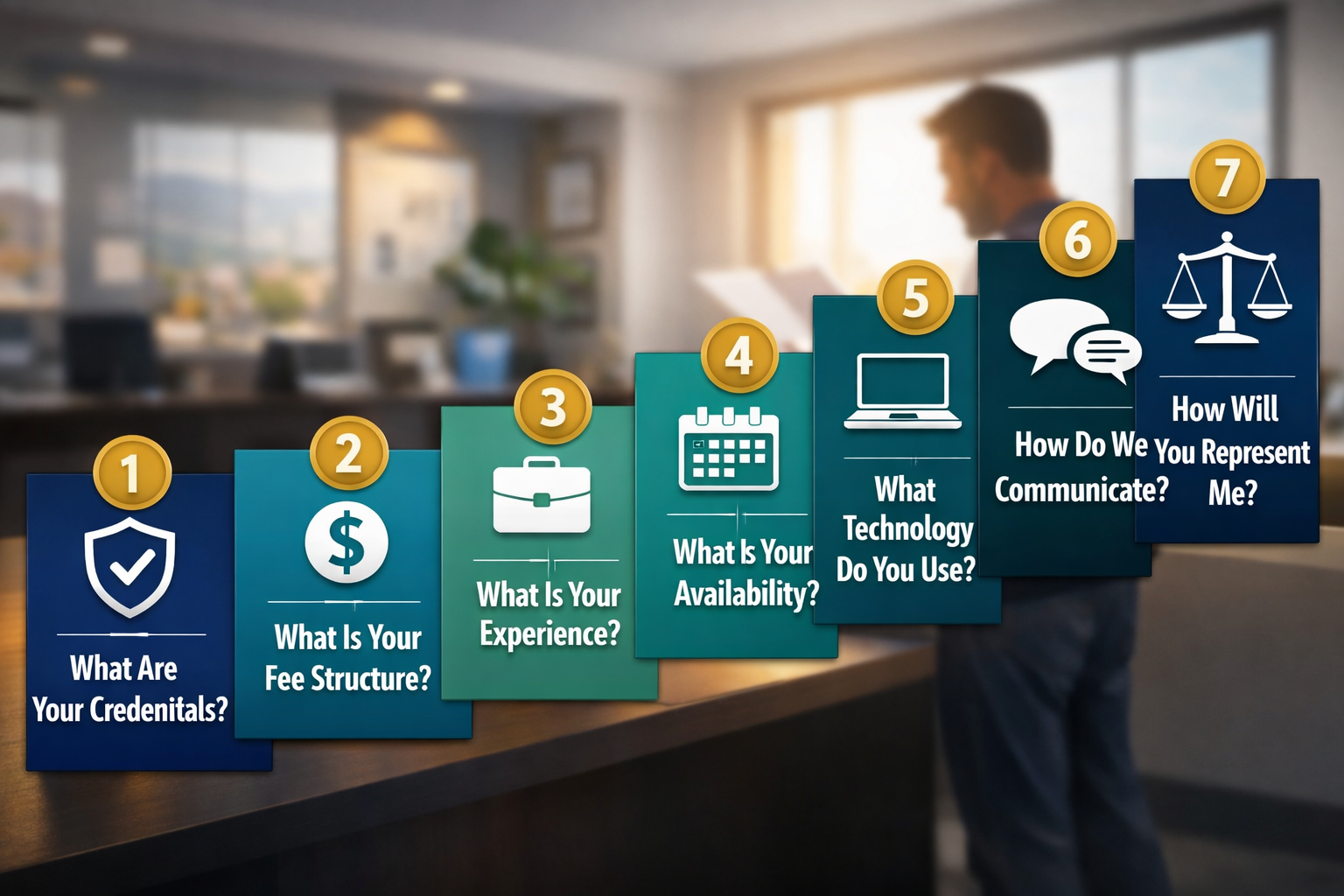
Beyond the seven core questions, small business owners should explore several other factors when selecting tax preparation services.
References and reputation
Ask for references from current clients with similar businesses. Established tax professionals should readily provide 3-5 contacts willing to discuss their experience. When checking references, ask:
- How long have you worked with this tax preparer?
- How responsive are they to questions?
- Have they identified tax-saving opportunities you weren’t aware of?
- How did they handle any issues or complications?
- Would you recommend them for my type of business?
Online reviews provide additional perspective. Check Google, Yelp, and Better Business Bureau ratings. Look for patterns in complaints rather than isolated negative reviews. Every professional occasionally has dissatisfied clients, but recurring issues signal problems.
Continuing education commitment
Tax laws change constantly. The Tax Cuts and Jobs Act of 2017 fundamentally altered business taxation. Subsequent legislation continues modifying deductions, credits, and compliance requirements. Your tax preparer must stay current through continuing professional education (CPE).
CPAs typically need 40 hours of CPE annually, with specific requirements for tax-focused education. Enrolled agents need 72 hours every three years, including ethics training. Ask: “What tax courses have you completed in the past year?”
Bookkeeping integration
Many tax preparation services also offer bookkeeping services in Cheyenne. Having the same firm handle both functions creates efficiency and ensures your books are tax-ready throughout the year.
If you use separate providers, confirm your tax preparer’s willingness to work with your bookkeeper. They should review your books quarterly or at minimum before year-end to identify issues early.
Questions about bookkeeping integration:
- “Do you provide bookkeeping services or work with bookkeepers?”
- “What accounting software do you recommend?”
- “How often should we review my books for tax planning?”
- “What financial reports do you need for tax preparation?”
For more guidance, see do tax preparation services provide bookkeeping support.
Multi-state and local tax expertise
If your Cheyenne business operates in multiple states, sells online to customers nationwide, or has remote employees in other locations, you need multi-state tax expertise. State tax laws vary dramatically, and nexus rules (what creates tax obligations in a state) have evolved significantly.
Wyoming has no state income tax, but if you have nexus in Colorado, Montana, or other states, you may owe taxes there. Your tax preparer should understand:
- State nexus thresholds and economic presence rules
- Sales tax collection and remittance requirements
- State-specific deductions and credits
- Apportionment formulas for multi-state income
Local tax considerations in Cheyenne include sales tax compliance and any industry-specific local requirements.
Transition and onboarding process
Switching tax preparers mid-stream requires careful transition planning. Ask potential new tax preparation services:
- “What information do you need from my previous preparer?”
- “How do you obtain prior year returns and supporting documents?”
- “What’s your timeline for taking on new clients?”
- “Do you charge for initial consultation and file review?”
Most professional tax preparers offer free initial consultations to assess fit. They’ll review your previous returns to identify potential issues or opportunities.
Timing matters: The best time to switch tax preparers is immediately after filing your previous year’s return (spring/summer). This gives your new preparer time to review your situation, implement planning strategies, and establish systems before the next filing season.
Learn more about when to book a tax preparation service before the deadline.
Red Flags: Warning Signs to Avoid When Choosing Tax Preparation Services
Certain behaviors and practices signal unprofessional or potentially fraudulent tax preparers. Recognizing these red flags protects you from costly mistakes and potential legal problems.
Refund-based promises
Guaranteed large refunds without reviewing your tax situation represent the biggest red flag[1]. No legitimate tax professional can promise specific refund amounts before analyzing your complete financial picture. Preparers who make such promises often inflate deductions, claim credits you don’t qualify for, or engage in outright fraud.
Similarly, avoid preparers who charge fees as a percentage of your refund[1]. This creates perverse incentives to maximize refunds through questionable means rather than prepare accurate returns.
Lack of physical presence or accountability
Online-only providers with no verifiable physical location pose significant risks[1]. If the website disappears or the preparer becomes unreachable, you have no recourse. While legitimate remote tax preparation services exist, they should have:
- Verifiable business addresses and phone numbers
- Professional websites with detailed information
- Clear ownership and staff credentials
- Established online presence and reviews
- Professional liability insurance
For guidance on remote options, see can you use an online or remote tax preparation service.
Signing blank forms
Never sign blank tax forms or authorizations[1]. Form 8879 (e-file authorization) should only be signed after you’ve reviewed the complete return. Signing blank forms gives the preparer carte blanche to file anything under your name and Social Security number.
Refund deposit manipulation
Legitimate tax preparers direct refunds to your bank account, not theirs. Refund anticipation loans and fees deducted from refunds often carry exorbitant costs. The IRS allows splitting refunds among up to three accounts, but your preparer should never require refunds flow through their accounts.
Lack of credentials or evasiveness
Preparers who won’t provide their PTIN, refuse to sign your return, or seem evasive about credentials should be avoided entirely. All paid tax preparers must:
- Have a valid PTIN
- Sign returns they prepare
- Provide their PTIN on the return
- Provide you a copy of the filed return
Encouraging questionable deductions
Aggressive or clearly improper deductions signal problems. Examples include:
- Claiming personal expenses as business deductions
- Inflating charitable contributions without documentation
- Reporting hobby income as business losses year after year
- Claiming dependents who don’t qualify
- Underreporting cash income
A professional tax preparer should ask probing questions about deductions and require documentation. They should explain audit risks associated with aggressive positions and let you make informed decisions.
Poor communication and disorganization
Disorganized preparers who miss deadlines, lose documents, or fail to return calls create unnecessary stress and potential penalties. Warning signs include:
- Repeatedly rescheduling appointments
- Losing documents you’ve provided
- Missing extension deadlines
- Failing to respond to calls or emails
- Disorganized office or file systems
Pressure tactics
High-pressure sales tactics don’t belong in professional tax services. Be wary of preparers who:
- Push unnecessary services or products
- Pressure you to decide immediately
- Discourage you from getting second opinions
- Make you feel uninformed or intimidated
- Rush you through signing without adequate review
How to Find Qualified Tax Preparation Services in Cheyenne
Finding the right tax professional requires research, referrals, and careful vetting. Cheyenne small business owners have several resources for locating qualified tax preparation services.
Professional directories and referrals
Start with professional organization directories:
- Wyoming Society of CPAs: State-specific directory of licensed CPAs
- IRS Directory of Federal Tax Return Preparers: Searchable database of preparers with credentials
- National Association of Enrolled Agents: Find enrolled agents by location and specialty
- National Association of Tax Professionals: Directory of credentialed tax preparers
Local business networks provide valuable referrals. Ask fellow small business owners in Cheyenne about their tax preparers. Industry associations, chambers of commerce, and networking groups often have members who can share experiences.
Your banker or attorney may recommend tax professionals they work with regularly. Financial professionals often collaborate and can suggest CPAs familiar with your industry.
Using Accountants Near Me Cheyenne
Accountants Near Me Cheyenne serves as a trusted local directory connecting small business owners with qualified accounting professionals. The platform helps you:
- Compare credentials of multiple tax preparation services
- Read reviews from other Cheyenne business owners
- Filter by specialization (industry, business size, services offered)
- Verify licensing and professional credentials
- Contact multiple providers to find the best fit
The directory focuses on licensed professionals with established local presence, reducing risks associated with unknown or unverified preparers.
Interview multiple candidates
Don’t hire the first tax preparer you contact. Interview at least three candidates to compare:
- Credentials and experience levels
- Fee structures and value provided
- Communication styles and responsiveness
- Industry expertise and client references
- Technology platforms and security measures
- Overall comfort and trust level
Most professional tax preparers offer free initial consultations. Use this opportunity to ask your seven core questions and assess whether the relationship feels right.
Evaluation criteria checklist
Create a simple scoring system to compare candidates:
| Criteria | Weight | Candidate 1 | Candidate 2 | Candidate 3 |
|---|---|---|---|---|
| Credentials (CPA/EA) | High | |||
| Industry experience | High | |||
| Fee transparency | Medium | |||
| Communication style | Medium | |||
| Technology/security | Medium | |||
| References | Medium | |||
| Year-round availability | High | |||
| Representation rights | High |
Rate each candidate on a 1-10 scale for each criterion, apply weights, and calculate total scores to support your decision.
The Value of Choosing the Right Tax Preparation Service
Investing in qualified tax preparation services delivers returns far beyond the fees you pay. The right tax professional becomes a strategic advisor who helps your small business thrive.
Financial benefits
Tax savings from proper planning and deduction identification often exceed professional fees many times over. A skilled tax preparer might identify:
- Equipment purchases qualifying for Section 179 expensing or bonus depreciation
- Home office deductions you weren’t claiming
- Retirement plan contributions reducing current taxes
- Tax credits for hiring, research, or energy efficiency
- Proper business structure to minimize overall tax burden
For specific examples, review the key benefits of hiring a tax preparation service and how a tax preparation service helps with deductions and credits.
Risk reduction
Compliance protection prevents costly penalties, interest, and audit complications. Professional tax preparers:
- Ensure accurate reporting and timely filing
- Maintain proper documentation standards
- Identify and correct errors before submission
- Represent you if audited or questioned
- Navigate complex regulations correctly
The IRS assesses penalties for late filing, late payment, accuracy-related issues, and fraud. Professional preparation minimizes these risks significantly.
Time savings
Reclaimed time allows you to focus on running your business rather than wrestling with tax forms. Small business owners typically spend 40-80 hours annually on tax-related activities. Outsourcing this work to professionals frees you to:
- Serve customers and generate revenue
- Develop products and services
- Manage employees and operations
- Plan strategic growth initiatives
- Maintain work-life balance
Your time has value. Calculate your effective hourly rate and compare it to tax preparation fees. The economics usually favor professional services.
Strategic planning
Proactive tax planning throughout the year positions your business for long-term success. A good tax preparer helps you:
- Structure major transactions tax-efficiently
- Time income and expenses strategically
- Plan for estimated tax obligations
- Evaluate business expansion decisions
- Prepare for ownership transitions or sales
This advisory relationship transforms tax preparation from a compliance burden into a strategic advantage.
Peace of mind
Confidence in accuracy eliminates stress and worry about IRS problems. Knowing a qualified professional reviewed your return, verified deductions, and stands ready to represent you provides invaluable peace of mind.
For self-employed professionals, understanding self-employed tax prep benefits of hiring an accountant clarifies the specific value proposition.
Frequently Asked Questions About Choosing Tax Preparation Services
What credentials should I look for in a tax preparer?
Look for Certified Public Accountants (CPAs) or Enrolled Agents (EAs) with current licenses and PTIN registration. CPAs offer the broadest expertise and are licensed by state boards, while EAs specialize in taxation and are federally licensed by the IRS. Both can represent you before the IRS on any tax matter[1].
How much should I expect to pay for small business tax preparation?
Small business tax preparation typically costs $300-$800 for sole proprietorships (Schedule C) and $800-$2,500 for corporations, depending on complexity. Hourly rates for CPAs range from $150-$400. Avoid preparers who charge based on refund amounts rather than work performed[1].
Can I switch tax preparers mid-year or during tax season?
Yes, you can switch tax preparers anytime, though the best time is immediately after filing when your new preparer has months to review your situation and implement planning strategies. If switching during tax season, start early as quality preparers fill their schedules quickly.
What documents should I bring to my first meeting with a tax preparer?
Bring prior year tax returns (2-3 years), current year income documents (W-2s, 1099s, business revenue records), expense documentation, asset purchase records, and any IRS correspondence. For business owners, include profit and loss statements, balance sheets, and depreciation schedules.
How can I verify a tax preparer’s credentials?
Verify CPA licenses through your state’s Board of Accountancy website. Check enrolled agent status through the IRS Directory of Federal Tax Return Preparers. Confirm PTIN registration and any disciplinary actions through IRS and state board databases.
What if my tax preparer makes a mistake on my return?
You remain legally responsible for return accuracy regardless of who prepared it[1]. However, preparers with professional liability insurance should pay penalties and interest resulting from their errors. Discuss error correction policies and insurance coverage before hiring.
Should I use the same firm for bookkeeping and tax preparation?
Using the same firm for bookkeeping and tax preparation creates efficiency and ensures your books are tax-ready year-round. However, separate providers can work well if they communicate effectively. The key is coordination between your bookkeeper and tax preparer.
How far in advance should I schedule tax preparation services?
Schedule tax preparation appointments in January or early February for April filing deadlines. Quality preparers book quickly during tax season. For optimal planning, establish relationships in summer or fall when preparers have more availability for strategic discussions.
Can my tax preparer help with IRS audits?
CPAs, enrolled agents, and tax attorneys have unlimited representation rights before the IRS and can represent you in audits. Other preparers may have limited or no representation rights. Confirm representation capabilities before hiring, especially for complex business returns[1].
What’s the difference between a CPA and a tax preparer?
CPAs are licensed professionals who completed rigorous education, passed comprehensive exams, and maintain continuing education requirements. They can provide tax preparation, planning, audit representation, and broader accounting services. “Tax preparer” is a general term that includes CPAs but also unlicensed preparers with varying qualifications.
Do I need a tax preparer if I use accounting software?
Accounting software handles bookkeeping but doesn’t replace professional tax expertise. Tax preparers identify deductions, navigate complex regulations, provide strategic planning, and represent you before the IRS. Software is a tool; tax professionals provide judgment, expertise, and accountability.
How do I know if a tax preparation service is legitimate?
Legitimate tax preparers have verifiable credentials (CPA license or EA enrollment), PTIN registration, physical business locations, professional liability insurance, and willingness to sign returns they prepare. They charge based on complexity, not refund amounts, and never ask you to sign blank forms[1].
Conclusion
Choosing the right tax preparation service ranks among the most important financial decisions small business owners make each year. The seven questions outlined in this guide provide a framework for evaluating credentials, fee structures, experience, availability, technology, representation rights, and quality control processes.
Remember that you remain ultimately responsible for your tax return’s accuracy, regardless of who prepares it. This makes selecting a qualified, trustworthy professional essential. Don’t let price alone drive your decision. The cheapest option often costs more in missed deductions, compliance problems, or audit complications.
Take action now:
- Document your needs: List your business type, complexity factors, and specific tax challenges
- Research candidates: Use professional directories and local referrals to identify 3-5 qualified tax preparers
- Schedule consultations: Interview multiple candidates using the seven core questions
- Verify credentials: Confirm licenses, PTIN registration, and professional standing
- Check references: Contact current clients with similar businesses
- Review fee agreements: Ensure transparent, written fee structures
- Make your decision: Choose based on credentials, experience, communication, and trust
For Cheyenne small business owners, finding qualified Cheyenne accountants who understand local business conditions and Wyoming tax advantages provides additional value. The right CPA in Cheyenne WY becomes a long-term partner in your business success.
Don’t wait until tax season to start this process. The best tax preparation services fill their client rosters quickly, and quality tax planning happens throughout the year, not just in March and April. Start your search today to ensure you have expert guidance when you need it most.
Your business deserves professional tax preparation services that combine technical expertise, industry knowledge, ethical practices, and genuine commitment to your success. Ask the right questions, verify credentials thoroughly, and choose a tax professional who will serve as a trusted advisor for years to come.
Related Reading
- Important Questions to Ask Before Choosing a Tax Preparation Service
- CPA Offices Near Me: How to Choose a Local CPA Firm You Can Trust
- Accountant for Small Business Near Me: How to Choose the Right Fit
- Must-Ask Questions Before Hiring an Accountant
- What Tax Prep Services Are Included When Hiring an Accountant
References
[1] How To Select A Tax Preparer – https://sourceaccounting.ca/how-to-select-a-tax-preparer/
[2] Tax Accountant – https://www.coursera.org/ca/articles/tax-accountant
[3] Tax Package Prep Checklist – https://employmenthero.com/en-ca/resources/tax-package-prep-checklist/
[4] How To Become Tax Preparer – https://ca.indeed.com/career-advice/finding-a-job/how-to-become-tax-preparer
[5] Qc;jsessionid=f1902dc70d94b71cf294683519bdb1c8 – https://www.jobbank.gc.ca/marketreport/requirements/14109/QC;jsessionid=F1902DC70D94B71CF294683519BDB1C8.jobsearch77?wbdisable=true
[6] Getting Ready For Tax Season – https://www.canada.ca/en/revenue-agency/news/newsroom/tax-tips/tax-tips-2026/getting-ready-for-tax-season.html
[7] How To Become A Certified Tax Preparer Canada – https://www.intuit.com/blog/life-at-intuit/intuit-experts/how-to-become-a-certified-tax-preparer-canada/
[8] 2026 Tax Prep Checklist – https://www.gatewaytax.ca/2026-tax-prep-checklist/
[9] Sw 223 V – https://www.revenuquebec.ca/en/online-services/forms-and-publications/current-details/sw-223-v/
[10] How To Choose Corporate Tax Expert Canada 2026 – https://t2taxpro.ca/resources/how-to-choose-corporate-tax-expert-canada-2026